
The Indian rupee saw a significant appreciation against the US dollar following President Trump's suspension of military strikes against Iran and the Reserve Bank of India's decision to maintain its key interest rate. Market sentiment was further buoyed by positive comments from the RBI regarding the health of the banking sector.

Indian equity benchmarks, Sensex and Nifty, ended lower after a spectacular rally, with the Sensex tumbling 931 points, as renewed tensions in West Asia, particularly the risk to the ceasefire deal after Iran closed the Strait of Hormuz, dampened investor optimism.
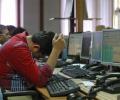
Stock exchanges and other market infrastructure institutions as well as their top officials are liable to face penalties for lapses in handling and recitfying technical glitches, with Sebi putting in a place a stricter compliance system driven by "financial disincentives". The markets watchdog has come out with a detailed Standard Operating Procedure (SOP) for Market Infrastructure Institutions (MIIs) less than five months after a technical glitch halted trading at the country's largest bourse NSE for nearly four hours. There will be a "financial disincentives" structure for MIIs -- stock exchanges, clearing corporation and depositories -- for any business disruption beyond pre-defined time, according to a circular issued on Monday.

Indian stock market indices Sensex and Nifty experienced a significant decline, driven by rising crude oil prices, sustained foreign fund outflows, and selling pressure in major bank stocks.

Qatar has halted liquefied natural gas (LNG) production after its facilities came under attack amid the ongoing West Asia conflict, disrupting supplies to India and squeezing feedstock availability for key domestic sectors.

Governance uncertainty and leadership visibility gap are likely to keep the stock under pressure in the near term, said Nomura in a report.

'It was diminishing even before Trump came to power.' 'The US was at the centre of the global economy. That position is going to become less and less important and less central.'

Saudi Arabia and the UAE are actively pushing Trump to take the war to its bitter finish and 'erase' Iran's presence in the geopolitics of the region. Simply put, the two most powerful Sunni Arab oligarchies are on the same page as Israel. Such interference increases the risk of a breakdown in dialogue between the US and Iran, points out Ambassador M K Bhadrakumar.

Technical fault was the reason behind it.

Indian benchmark stock indices Sensex and Nifty rallied for the second consecutive day, closing nearly 1 per cent higher, driven by gains in metal and auto sectors and positive global market trends.

Indian stock market benchmarks Sensex and Nifty rebounded by over 1% on Monday, driven by value-buying in banking stocks after a three-day slump. Key gainers included UltraTech Cement, HDFC Bank, and Mahindra & Mahindra.

Indian benchmark indices Sensex and Nifty experienced a sharp decline in early trading due to escalating tensions in the Middle East, driving crude oil prices higher. Global market bearishness and foreign fund outflows further contributed to investor unease.

Indian stock market indices Sensex and Nifty experienced a significant drop in early trade, reversing a three-day rally. The decline was triggered by a sharp increase in crude oil prices, weak global market trends, and continuous outflows of foreign funds.
Sebi had given the exchanges a 2-year window to comply or exit.

Tina Ambani, wife of Anil Ambani, skipped the Enforcement Directorate (ED) summons for the second time in connection with a money laundering case. Anil Ambani has been asked to appear before the agency as well.

Eternal, the parent entity of Blinkit and Zomato, on Wednesday said Deepinder Goyal will step down as its Group CEO and Managing Director with Blinkit CEO Albinder Dhindsa set to succeed him as Group CEO from February 1.
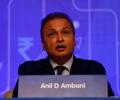
The Enforcement Directorate has issued fresh summons to Reliance Group chairman Anil Ambani to appear for questioning on February 26 after he skipped deposition this week, official sources said on Thursday.

Indian equity markets experienced a significant downturn as geopolitical tensions in West Asia, rising oil prices, and foreign fund outflows dampened investor confidence. The Sensex and Nifty both fell sharply in early trade, reflecting broader global market weakness.

US President Donald Trump threatened to bomb Iran if a deal is not reached before the ceasefire ends, while Pakistan urged both sides to extend the truce and pursue diplomacy.
Markets regulator Sebi on Wednesday overhauled the block deal framework for stock exchanges, by setting a minimum trade size limit of Rs 25 crore and introducing two trading windows with tighter price limits and enhanced disclosure norms. The latest move by the Securities and Exchange Board of India (Sebi) aims to ensure greater transparency and efficiency in the execution of large trades.
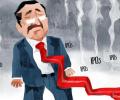
Share of IPOs opening above issue price drops to 64.6%, median gains shrink sharply amid market volatility.

FSN E-Commerce Ventures, the parent company of Nykaa, anticipates its consolidated net revenue for Q4 FY26 to achieve high 20 per cent year-on-year growth, marking its strongest performance in 12 quarters, fueled by accelerated growth in both its fashion and beauty verticals.

The Indian rupee weakened against the US dollar due to sustained foreign fund outflows and uncertainties in West Asia, although lower crude oil prices and a positive opening in domestic equity markets limited the losses.

The Securities and Exchange Board of India (Sebi) has, in principle, agreed to the proposed settlement of the long-pending colocation and dark fibre cases filed by the National Stock Exchange (NSE), Sebi chairman Tuhin Kanta Pandey said on Wednesday.
Among Sensex firms, Power Grid, Eternal, Bharti Airtel, Axis Bank and Infosys were the biggest laggards. However, Mahindra & Mahindra, Sun Pharma, Kotak Mahindra Bank and State Bank of India were among the major gainers.

The Indian rupee weakened against the US dollar due to a strengthening dollar, high crude oil prices, and foreign fund outflows amid geopolitical uncertainties.
Bharat Electronics, Reliance Industries, Mahindra & Mahindra, Larsen & Toubro, InterGlobe Aviation, ICICI Bank and UltraTech Cement were among the other major gainers. Axis Bank, Infosys, Tata Consultancy Services, Trent and Titan were the laggards.

MCX Stock Exchange is bullish on breaking-even in one year's time frame.
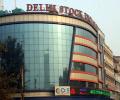
Delhi Stock Exchange's (DSE) struggle to end its life without hurting the diverse interests of its multiple stakeholders will continue into another year.
Indian benchmark equity indices experienced a significant downturn, with the Sensex plummeting over 800 points and the Nifty falling sharply, driven by rising crude oil prices, geopolitical tensions, and foreign capital outflows.
Days after an outage at MCX, Sebi chairman Tuhin Kanta Pandey on Tuesday expressed his displeasure over "repeated" instances of breakdowns at exchanges.

The Nifty IT index hit a more than nine-month low, trading at its weakest level since April 17, 2025.
Among the Sensex shares, Infosys, Tata Motors, Axis Bank, Adani Ports, Mahindra & Mahindra, HDFC Bank, Larsen & Toubro, Tata Steel, BEL and Power Grid were among the lead gainers. Kotak Mahindra Bank, ICICI Bank, Bharti Airtel, Asian Paints, Bajaj Finserv, and Titan were the among the laggards.

'Market momentum and investor interest are at unprecedented levels, making this the opportune moment.'

The initial public offering (IPO) market in India last year was hot, with companies raising over $22 billion in 2025. But half of the 350-plus companies that listed on the stock exchange last year traded below their offer price, according to a new research report released by HSBC Global Investment Research - a sobering fact despite what otherwise looked like a rush of companies eager to list on the bourses.

Capital markets regulator Sebi on Tuesday granted additional time to stock brokers for the full rollout of the retail algo trading framework by April next year, allowing a phased implementation to ensure a smooth transition to the new system.

From the 30-Sensex firms, Tata Steel, Kotak Mahindra Bank, Reliance Industries, Axis Bank, Titan and Trent were among the biggest gainers. However, Tata Consultancy Services, Tech Mahindra, Infosys, Bajaj Finance and Sun Pharma, were the laggards.

Base revisions are technical exercises, but history shows they can significantly reshape the narrative around India's growth performance.

The question is whether the clocks allow enough time for two deeply mistrustful sides to get there, and whether the surface calm holds long enough for the paddling to produce something before the ceasefire ends on April 22, notes Prem Panicker in his must read blog on the Iran War.

...is a way out, notes Prem Panicker in his must read blog on the Iran War. What the indefinite extension produces is a prolonged condition of not-war-not-peace, in which oil markets cannot stabilise, Asian refineries cannot plan, European governments cannot stop subsidising consumption they cannot afford, and the next flashpoint -- a seized tanker, a miscalculated drone strike, a Truth Social post that claims too much -- is one news cycle away.
